GOVERNMENT-CERTIFIED COURSE
50% OFF
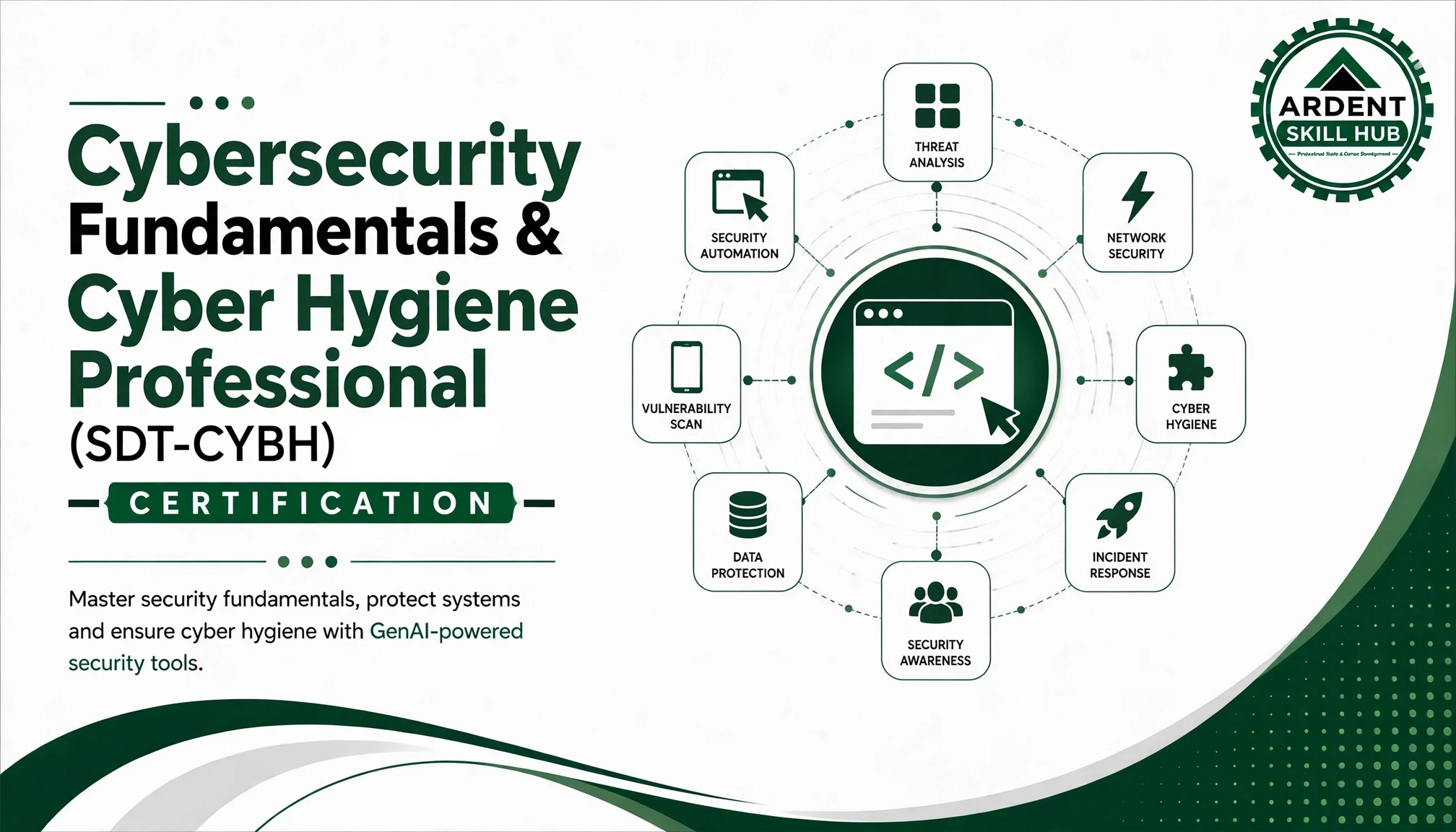
Ardent Certified-CyberShield-Digital Security & Cyber Hygiene (CYBH)
Covers core security concepts and hygiene practices valuable across all BSc specialisations and increasingly expected as baseline workplace knowledge. Tools & Platforms: Kali Linux (intro), password managers, network scanning tools (basic)
₹45,000
₹22,500
Save ₹22,500
6 Months
Duration
Live +
Recorded
Max 30
Students
Govt.
Certified




Empowering learners with AI skills
to build a smarter tomorrow.
to build a smarter tomorrow.
Learning Outcomes
- Identify common cyber threats and apply basic protective measures
- Design and run a phishing-awareness exercise for an organisation
- Draft a basic incident-response checklist and cyber-hygiene policy
- Recognize phishing and social engineering attacks across email, messages, websites, and social media.
- Protect personal and professional data using appropriate privacy and security practices.
- Secure digital devices and applications through updates, access controls, and safe configuration practices.
- Social Media Security – Protect accounts, privacy, and personal information across social platforms.
- Evaluate suspicious links, files, websites, and digital communications before interacting with them.
- Data Protection – Safely store, share, and manage sensitive personal or business information.
- Practice safer online transactions and digital communication while minimizing security risks.
Course Objectives
- 1. Build foundational understanding of core cybersecurity concepts and common threats
- 2. Develop practical awareness of safe digital practices and basic incident response
- 3. Understand data-privacy and compliance basics relevant to any organisation
- 4. Build cybersecurity awareness and understand the importance of protecting digital identities, devices, networks, and information.
- 5. Learn secure browsing practices to identify suspicious websites, links, downloads, and online activities.
- 6. Understand data privacy and protection principles for safely handling personal and professional information.
- 7. Develop device security awareness for computers, smartphones, applications, and connected devices.
- 8. Recognize social engineering techniques and identify potentially fraudulent or manipulated communications.
- 9. Learn basic incident-response practices for reporting, containing, and responding to common security incidents.
- 10. Promote a security-first mindset that supports safe digital behavior in academic, professional, and personal environments.
Applications in Industry
- IT support and junior cybersecurity awareness roles
- Cyber-hygiene and compliance functions in any organisation
- Foundation for further specialisation in cybersecurity certifications
- Personal Digital Security – Protect personal accounts, devices, files, and online identities.
- Online Banking & Payments – Follow secure practices when using digital banking and payment platforms.
- Social Media Security – Protect accounts, privacy, and personal information across social platforms.
- Data Protection – Safely store, share, and manage sensitive personal or business information.
- Device Security – Improve the security of laptops, desktops, smartphones, and other connected devices.
- Remote Work Security – Follow safer practices when accessing workplace resources from home or public locations.
- Organizational Security Awareness – Support a culture of security by encouraging responsible digital practices among employees.
Frequently Asked Questions
It is a practical cybersecurity awareness program focused on digital safety, cyber hygiene, threat awareness, privacy, account protection, and secure online practices.
The course is suitable for students, graduates, freshers, working professionals, and anyone who regularly uses digital devices and online services.
No. The course is designed for beginners and introduces cybersecurity concepts through simple, practical examples.
Learners will understand threats including phishing, malware, ransomware, social engineering, online scams, identity theft, and unsafe digital practices.
Yes. The program teaches learners how to recognize suspicious emails, links, messages, websites, attachments, and social-engineering attempts.
Yes. Learners will understand strong password practices, password managers, Multi-Factor Authentication (MFA), account protection, and access security.
No. The primary focus is digital security awareness and cyber hygiene, rather than advanced penetration testing or offensive cybersecurity techniques.
Yes. The course covers practical approaches to protecting personal information, managing privacy settings, and securely handling digital data.
The skills can be applied in personal digital life, workplaces, educational institutions, remote work environments, online banking, social media, and everyday internet usage.
The program develops essential cybersecurity awareness and digital safety skills that are increasingly valuable across modern workplaces, while also providing a foundation for further study in cybersecurity and information security.
Course Content — Modules
1
Cybersecurity fundamentals: CIA triad, threat landscape overview
No lectures added yet
2
Common attack types: phishing, malware, ransomware, social engineering
No lectures added yet
3
Password security, MFA, and identity protection basics
No lectures added yet
4
Network security fundamentals: firewalls, VPNs, secure Wi-Fi practices
No lectures added yet
5
Overview of security certifications and career pathways
No lectures added yet
6
Foundations Recap & Concept Check
No lectures added yet
7
Setting up and exploring a basic security lab environment
No lectures added yet
8
Introduction to vulnerability scanning tools
No lectures added yet
9
Safe browsing, email security, and phishing-simulation exercises
No lectures added yet
10
Basic incident-response workflow: identify, contain, report
No lectures added yet
11
Data privacy fundamentals and compliance basics (IT Act, GDPR overview)
No lectures added yet
12
Organisational cyber-hygiene policy design
No lectures added yet
13
Skill Consolidation Workshop
No lectures added yet
14
Applied Mini-Exercise / Practice Lab
No lectures added yet
15
Case Study: Analysing a phishing attack and response workflow
No lectures added yet
16
Case Study: Data breach incident response for a mid-size company
No lectures added yet
17
Cross-Case Synthesis & Group Presentation
No lectures added yet
18
Capstone Kickoff & Problem Scoping
No lectures added yet
19
Capstone Development — Core Build (Cybersecurity Fundamentals & Cyber Hygiene Professional)
No lectures added yet
20
Capstone Review & Mentor Feedback
No lectures added yet
21
Capstone Finalisation & Presentation
No lectures added yet
22
Resume, Portfolio & LinkedIn Refresh
No lectures added yet
23
Mock Interview Rounds & Feedback
No lectures added yet
24
Capstone Presentation — Mock Panel Pitch
No lectures added yet
 50% OFF
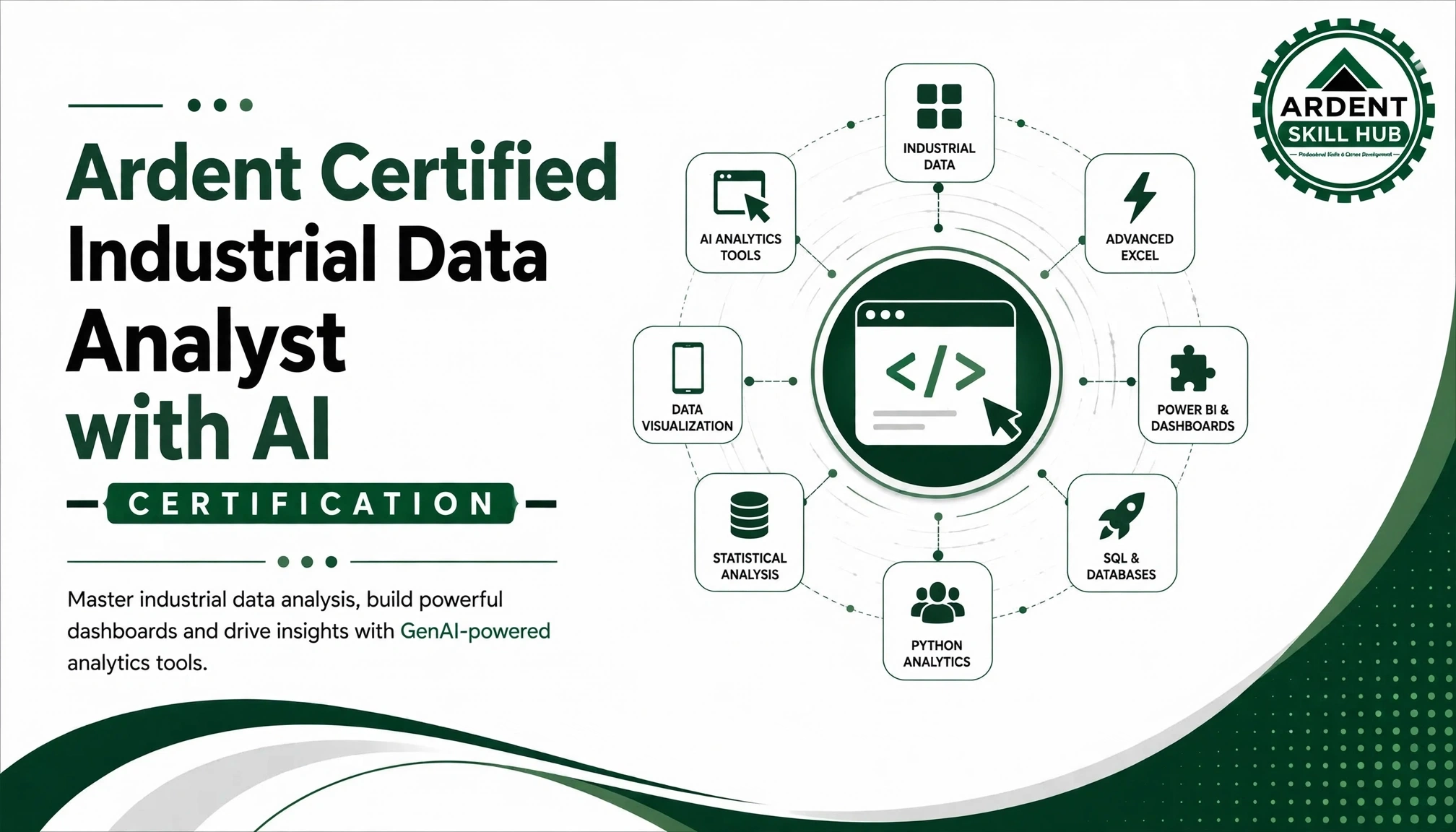
Ardent Certified AI-Powered Industrial Data Analyst — Advanced Excel, Power BI & Tableau (AIDA)
₹45,000
₹22,500
Save ₹22,500
 50% OFF
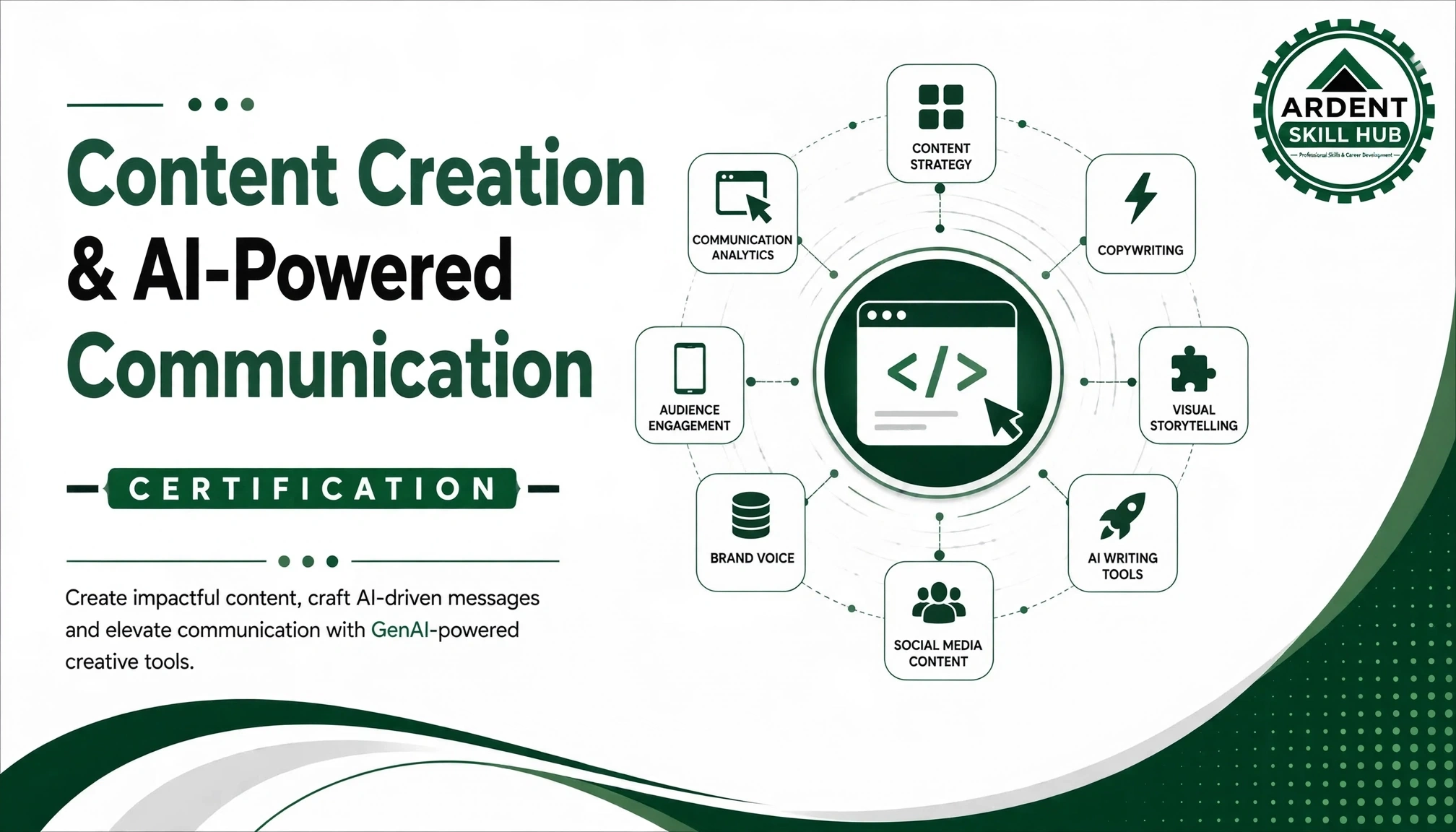
Ardent Certified-AI-Powered Content Creation, Communication & Office Automation (AICO)
₹52,000
₹26,000
Save ₹26,000
 50% OFF
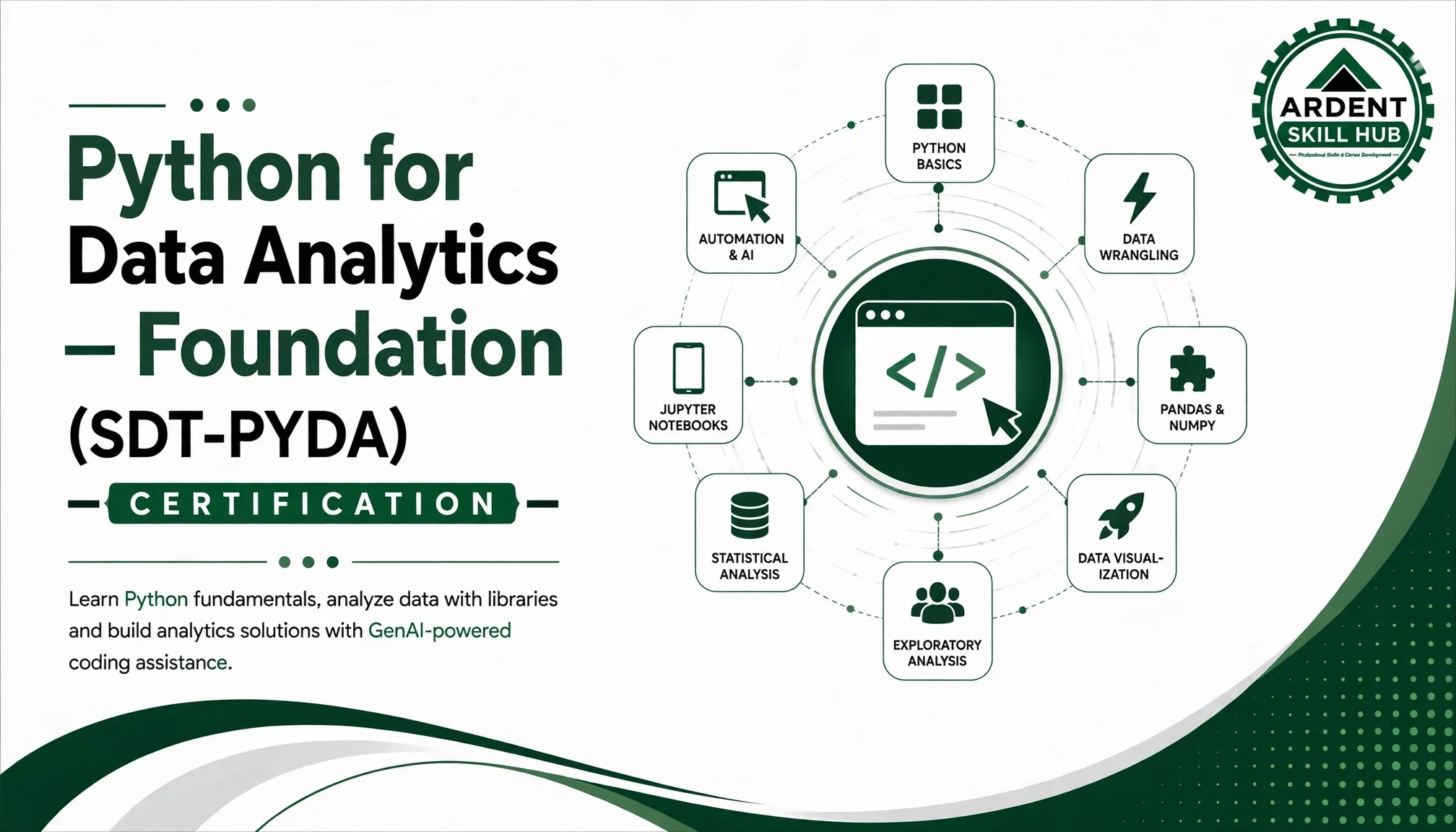
Ardent Certified-Python for Data Analytics & Data Science (PYDA)
₹45,000
₹22,500
Save ₹22,500
Course Delivery Format
Duration6 months (100 hours total)
ModeOnline Live Classes + Recorded Lectures
ScheduleWeekend & Weekday Evening Batches
Batch SizeMaximum 30 students
Prerequisites
- Laptop/Desktop with stable internet connection
- Basic English proficiency
- Willingness to dedicate 4–5 hours weekly
- No prior technical knowledge required
Investment & Scholarships
Course Fee
₹45,000
₹22,500
EMI OptionsAvailable
ScholarshipsMerit-based & Need-based
Early Bird15% Discount
Certification
- Course Completion Certificate
- Industry-recognized certifications
- LinkedIn badge
- Project completion certificates
Placement Support
- Resume building & LinkedIn optimization
- Mock interviews & soft skills training
- Access to job portal with 200+ partners
- Networking sessions with industry professionals
- Lifetime placement assistance
Learning Support
- 24/7 access to recorded lectures
- Doubt clearing sessions twice weekly
- Dedicated mentor support
- Peer learning community
- Monthly industry expert guest lectures